Tlachtli, or Orcball as it is known in most of the known world, is a sport quite popular in the Broken lands. Orcball is an ancient game, and some of the ceremony is archaic, and for some parts, terrible. However, the game itself is rather interesting, and, if held properly, could prove as a good international sport.
Equipment:
Tlachtli: To play Orcball, you need a Tlachtli, or a heavy rubber ball, about the size of a head. Traditionally this is made from the Tar for the pits south of Oenkmar, but really any sufficient rubber ball is ok. There is no standard ball size, just approximate size.
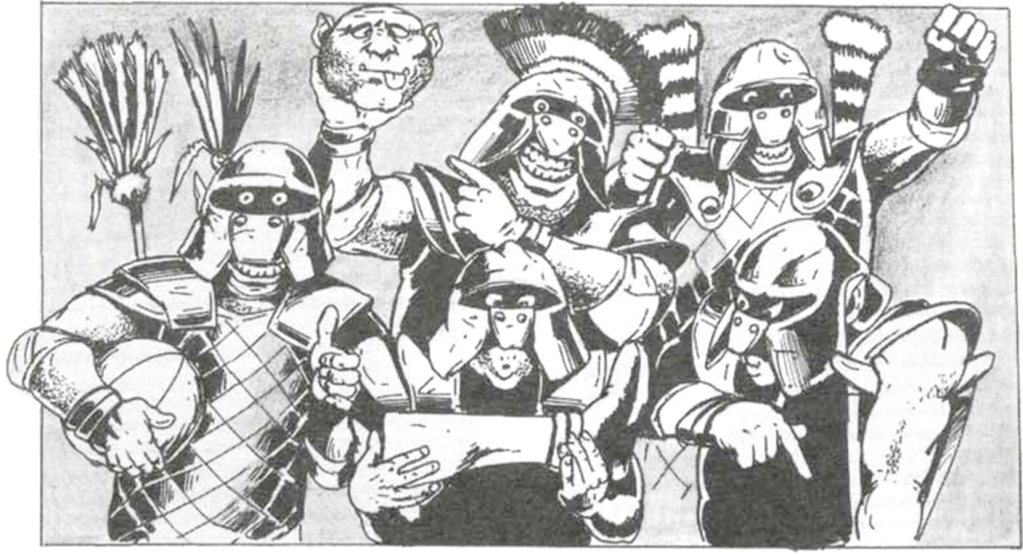
Uniforms: Teams often wear full face Leather helmets, and a padded uniform that provides a “Team look” to their team. This uniform is a type of padded armor, and helps players identify their team when in combat, and give protection to them from the clubs.
Club: each player of Orcball is given a club. This club is used to fight off players who would try to take the ball from you during the game.
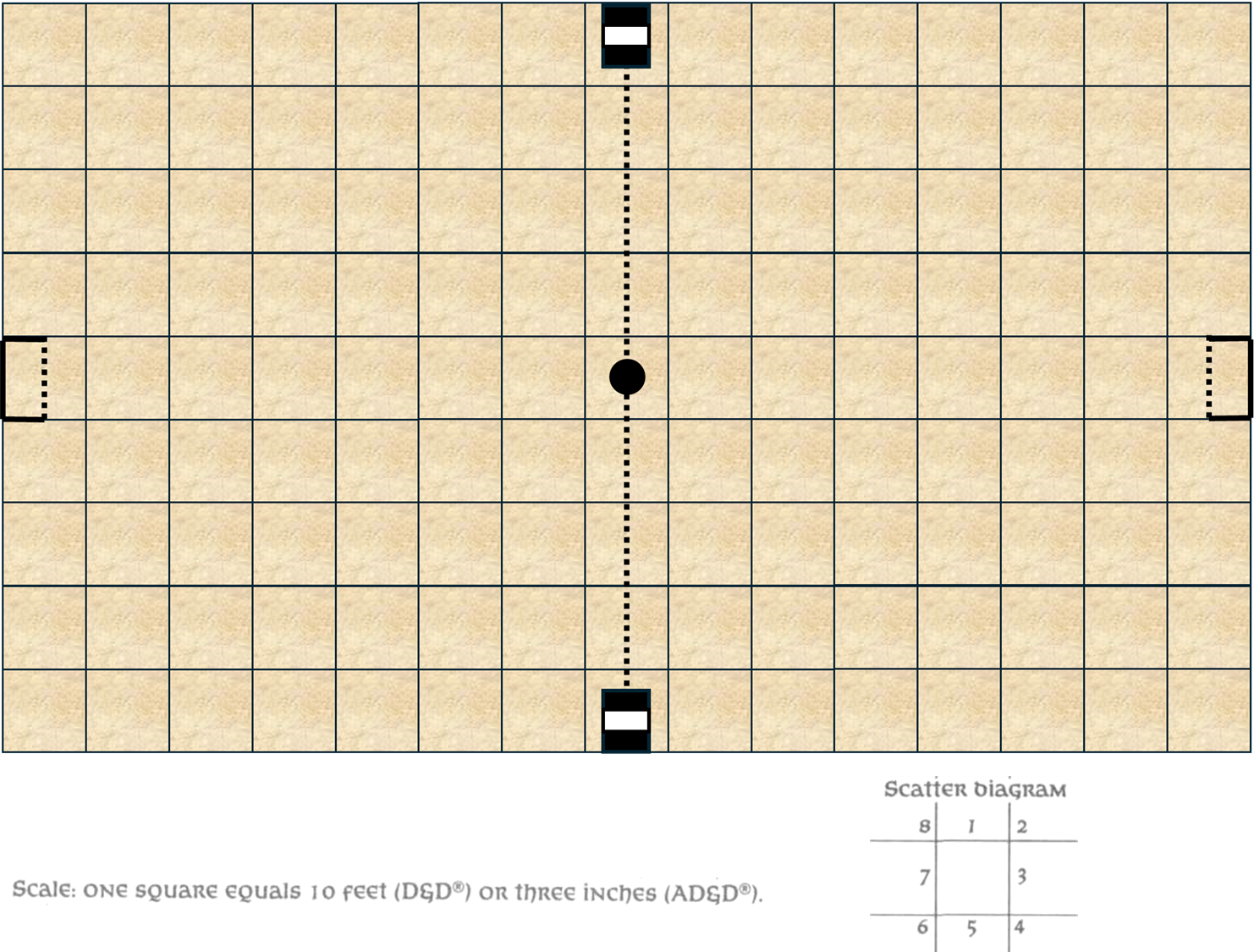
Arena. The arena for this game is played on a field 150 feet long by 90 feet wide. Each side has 2 goal posts about 10 feet apart set. in the middle of the court on both sides are 2 stone hoops (20 feet up and on each side)
Game Rules: Each team in an Orcball game has between 6 to 12 players. Whatever number is chosen, must be played on both teams. So if one team shows up with 7 players, and the other team has 10 players, they must only play with 7 on each team.
The purpose of the Game is to kick the ball across the field and into the goal. The ball can only come into contact with feet, knees, hips, elbows, and walls.
Combat is allowed in the game, Tackling and clubbing other players is common form during the game. and players knocked unconscious during the game can be replaced immediately (up to 2 replacements per game)
Penalties, It is forbidden to carry the ball, or touch the ball with anything other than feet, elbows, knees or hips. Players who do this, accidentally or not are given a penalty . The penalty is being trampled by the opposing team or clubbed. If they opponents choose clubbing then form a circle around the penalized payer and each take a good whack. If they choose trampling, they all line up in single file and run over top of the penalized player.
Scoring and Winning: every time a team gets the ball into a goal at the opposite end of the field, they score a point. The ball is then returned to the center of the field, and the teams line up along the wall near their goal posts. At this point both teams charge forward again.
When 1 team has scored 3 points, the game breaks for half time. Traditionally this lasts as long as it takes an Orc to pick his ten toes. But may be a set time.
After Half time, the game resumes and continues until a team has scored a total of 6points (including the first half of the game. This team will be declared the winners.
Hoop win: at any time, if a player manages to get the ball through on of the stone hoops on the side of the field, his team is immediately declared the winners. (Despite the score a far). The kicker is at the hoops are 20feet high and are barely bigger that the ball, making it near impossible to get through.
Culture and Traditions: The game is used for both inter city entertainment, with each city of the broken lands having their own local teams. It is also used as a type of gladiatorial arena, and prisoners are forced to play for the entertainment of the citizens.
When played by prisoners, the losing team is sacrificed to the immortals.
Either way, the winning team is allowed to immediately chase spectators down in the area and take whatever the spectator brought into the game stands as a prize. Any spectator who escapes the arena can keep their belongings.
Famous Teams:
- Bugburian Lava-Ballers (Bugburia)
- Gobliny Wolf-Riders (High Gobliny)
- Hobgobland Raiders (Hobgobland)
- Kol Claws (Kol)
- Ogremoor Bone Crushers (Ogremoor)
- Rexian Skull Smashers (Orcus Rex)
- Orcland Reds (Red Orcland)
- Gnollistan Howlers (South Gnollistan)
- Trollhattan Rippers (Trollhattan)
- Orkian Storms (Yellow Orkia)
Now, of course all of these teams are from the Broken lands, and the Thar controlled tribes. There may be teams from other nations, you may choose for your game, but the more civilized nations will probably nor sacrifice the losers, or base the Half time period on an Orc’s foot picking.
Important: The Azcan Nation in the Hollow World still plays the original game of Tlachtli, which is different. The Orcs have definitely adjusted the rules to their liking.
How to Play the Game – In Game.
If your players find their way into a game of Orcball, they better play well. In Advanced D&D, or BECMI D&D Orcball is a dexterity proficiency. In 5E it could be a “tool” proficiency (based on Dexterity). either way, skilled players have an advantage on those with no experience in the game.
Movement: at the beginning of the round, make unarmed team combat initiative. Whatever method is used by your system of choice, it doesn’t matter, you just have to decide which team moves first in each round of the game. Each team take their turn to move (using their games movement system) on their turn.
Kicking If a player comes into the space that the ball is in they are able to kick the ball by making an Orcball (dex) skill roll. (in 5E the difficulty is 12). a successful skill shows that they kicked the ball successfully. Failure means they missed the ball and will have to turn around to get it, critical failure indicates they trip and fall prone.
The number of by which a player beats his roll by indicates how many spaces on the field the ball moves (any direction the player choses). For example, a player beats the roll by 5, the ball will move 5 spaces on the board. If they just barely succeed (exactly on the score needed), the ball stays with them as they move (increasing the probability of Tackling)
If the player is ever in the same space as the ball and another player at the same time, they much either be tackled or tackle the opponent before they can kick the ball. (See below for Tackling)
Intercepting the Ball: If the crosses an occupied space, a player may intercept the ball. If the player moves immediately into the path of the balls movement, this may also be accomplished. The player makes an Orcball roll (Dex), and if they succeed they intercept the ball and it stops in their space instead of the full distance. This player may then kick the ball (see above).
A failed roll indicates that the ball bounces off the player randomly (1d8, consult the “Scatter Chart” on the board. If the interception fails by 10 or more, then the ball keeps moving on its normal path.
Interception is not possible during melee and will automatically be scattered.
Tackling: At any point when 2 or more players are on the same space of the game, Tackling must occur until only 1 is standing. To tackle the player has 2 choices:
Shove the other opponent over: Make a contested Strength Check, loser falls over, and the winner continues their moving if they beat their opponents roll by 10 or more. (Damage is the difference of the 2 rolls)
Club / attack: The player may instead attack the opponents, this stops the movement for the round, and the attack is made using standard combat rules for your system of choice.
In combat the clubs do normal club damage, but the Padded armor / uniform give a bas AC of 8 (or 12 Ascending), and half of the damage is non-lethal. At 0 hp, the player is knocked unconscious, they can then be replaced (up to two replaced players per game) if they reach a negative hp value of 1/2 their hp they can be killed.
NO MAGIC IS PERMITTED, this will lead to a Penalty.
Sizes: Players may be divided into different size classifications:
- Meatballs: Kobolds, Goblins and similar sized players.
- Regs: Orcs, Hobgoblins, and human sized players
- Stompers: Gnolls, Bugbears, and trolls. Slightly taller than humans.
- Heavies: Ogres, and Giants.
Meatballs and Heavies have a -5 penalty to their tacking rolls against each other. While Meatballs and Stompers have a -2 to these rolls against each other, as do Regs and Heavies against each other.
Bouncing: every time the ball bounces, either off a wall or another player, the ball moves an additional 1d4 spaces due to its extremely bouncy nature. If aimed properly, the ball may be bounced off of players and the wall several times, thus moving incredible distances. If the club is used to hit the ball, it moves 1d8+ strength adjustment spaces.
Penalties: It is forbidden to touch the ball with any body part except foot, knee, hip and elbow. Every time the ball stops in a melee, the lowest intelligence player must make a dexterity check (DC 12 for 5E) or, accidentally touch the ball, thus causing a penalty.
If they recieve a Penalty, the opposing team may:
Trample them: The entire team lines up and runs over the Penalized player (Meat Ballers cause 1d4 damage each, Regs 1d6, Stompers 1d8, and Heavies 1d10).
Clubbing: The opponent team circles the penalized player and each take 1 swing at them with their clubs (1d6 damage each)
Scoring: as mentioned above, just by getting the ball into the goal, the team earns 1 point, but if the player wishes to try to try for the stone hoops to finish the game early, he must kick the ball (above), and have enough move from the ball to move to the hoop plus 2 spaces (it is 20 feet in the air), and then they must make a ranged attack roll for AC 0 (20 Ascending). if they complete all of these without the ball being intercepted, then their team wins.
Tlachtli Was originally Published in The Orcs of Thar by Bruce Heard, 1988.
 Baldwin Games
Leave a comment