Playing cards were invented around the 9th century AD in China. Here, they were used for gambling, fortune telling, and planning military strategy.
By time they migrated to Europe, 500 years later, hundreds of games had been made.
War (or Battle in England) was developed in Europe. Some believe it is descended from the Chinese game of Zheng Fen, but I don’t see enough resemblance.
War was most likely brought to North America by French immigrants in the late 1800s. Some people believe it was invented by American Soldiers during their downtime during the Vietnam War. I have not been able to find a definitive history of the game.
Basic Rules
Some Gameologist claim that the basic game of War is not a game. There is no chance for strategy and depends 100% on chance.
The game needs 2 or more players, but 2-4 is best.
One player deals the entire deck of 52 (or more) cards out to the players evenly. If you have leftover cards that can not be dealt evenly, set them aside.
Players do not look at their deck of playable cards. They remain face down.
Each round, everyone places their top card face up in front of them. The player with the highest card takes them all. They place them face up in a discard pile.
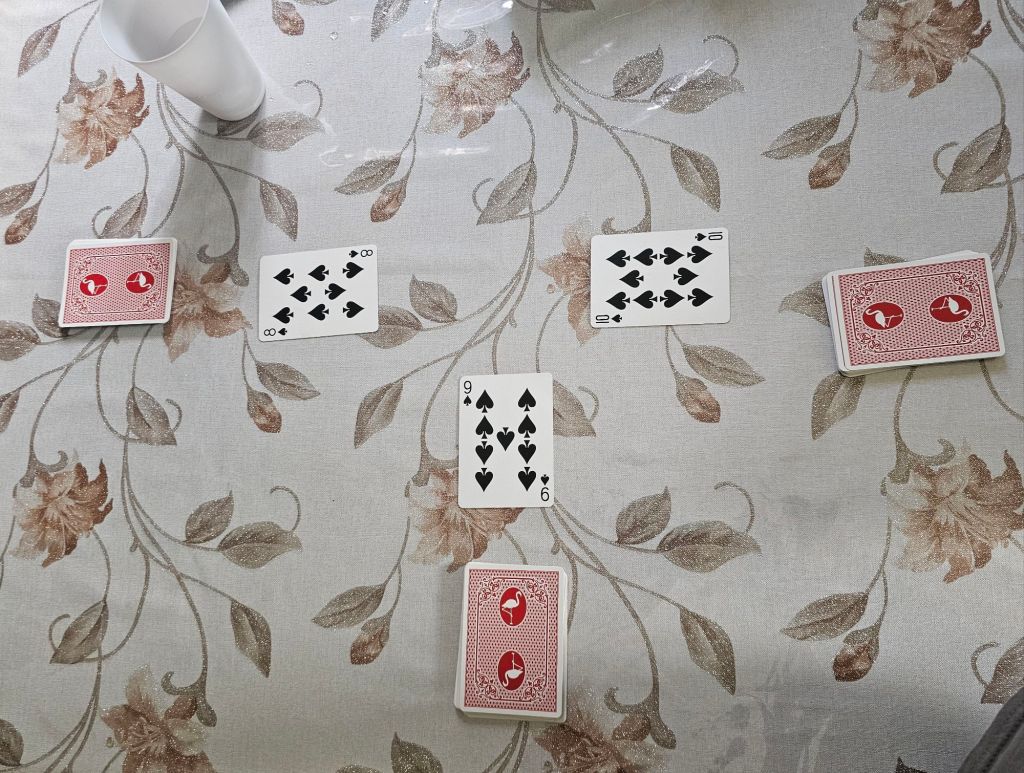
If any 2 players have the same number or value of a card, War is declared.
When War is declared, all players put 2 face-down cards next to their last card in play. Then they place one more face-up card. The highest of these cards wins the round and takes all 4 cards from each player.
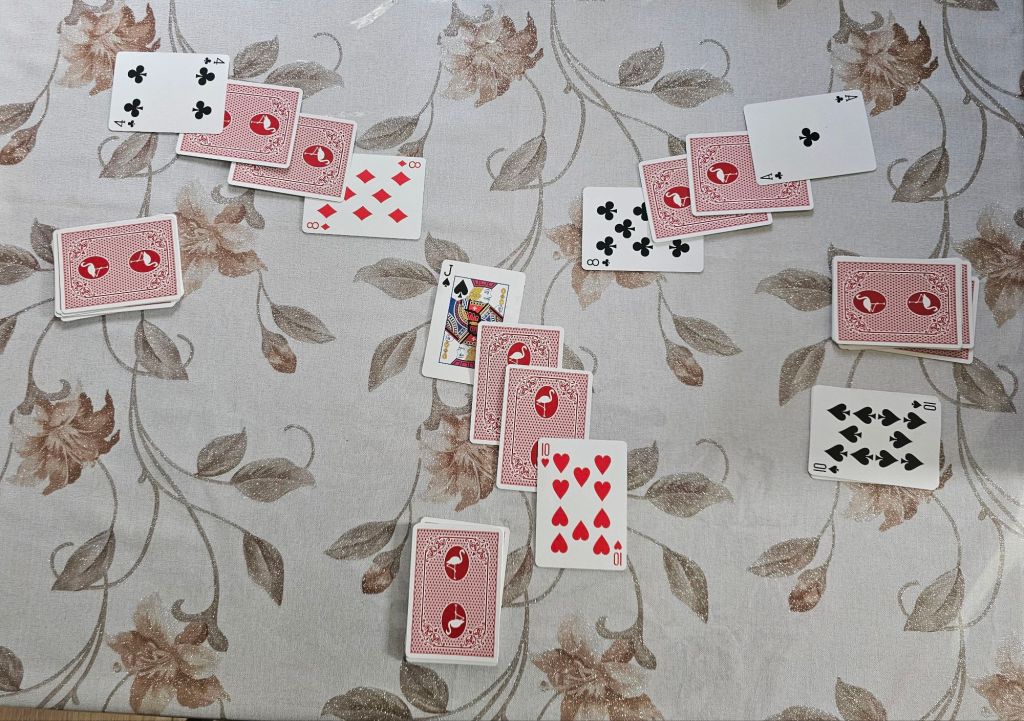
If during a War, the final face up cards include two cards of equal value, ANOTHER War is played.
When a player runs out of cards in their play deck, they turn their discard pile over and use it ss a play deck.
If a player runs out of cards during a War, they may immediately use their Discard pile, by flipping it over as above. If they still run out of cards during a War, their final card is placed face up as their deciding factor.
The last player with cards wins.
Options
As a basic game, luck is key. But with some options, strategy can be implemented.
Peace
In peace, the game plays exactly the same as War, except the lowest card is always the winning card.
This is still a chance game. Some call this Underdog War, but I use that term below for another option.
Prisoners of War
This option adds some strategy.
Instead of playing an unknown card from the play deck, a player may choose instead to play the top card of their discard pile as “prisoner.”
The player must still play at the same time as everyone else, so they don’t get to see the opponents’ cards first. They also cannot look at their own top play deck card before making the choice.
If a prisoner wins, the game continues normally, but if the prisoner loses, then the prisoner and the top card of their play deck are lost together.
Automatic War
In this option, if any player places down the number 2, War is declared. This leads to more Wars being declared.
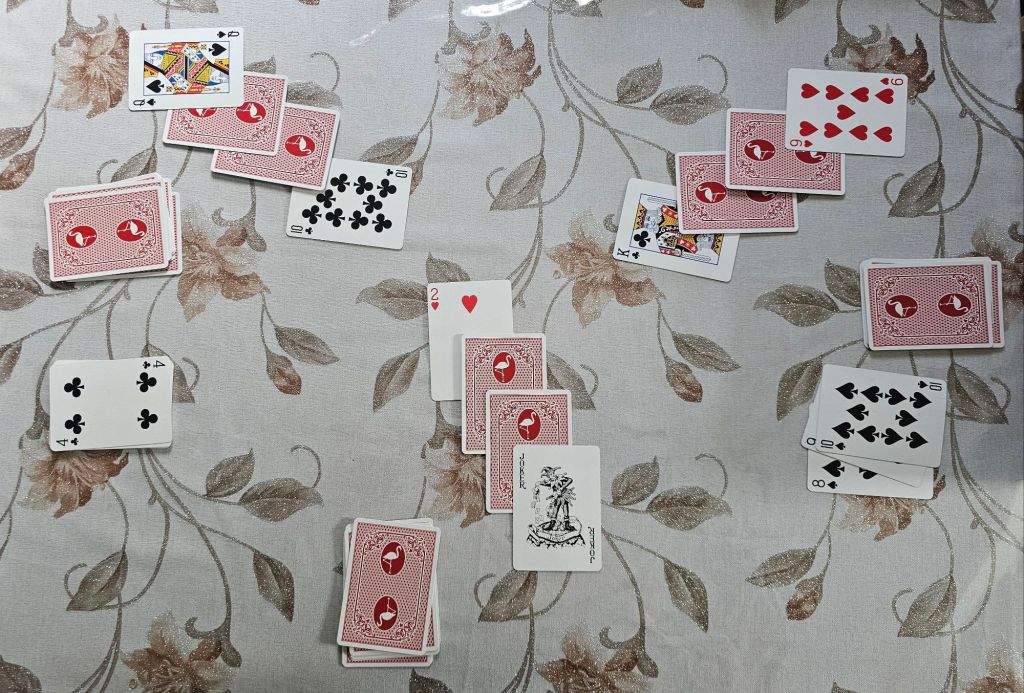
Underdog War
This option affects the outcome of a War. When a War is completed, all players must reveal their face down cards BEFORE giving them to the winner. If one of the face down cards is a Jack card, the original owner of the Jack becomes the new Winner.
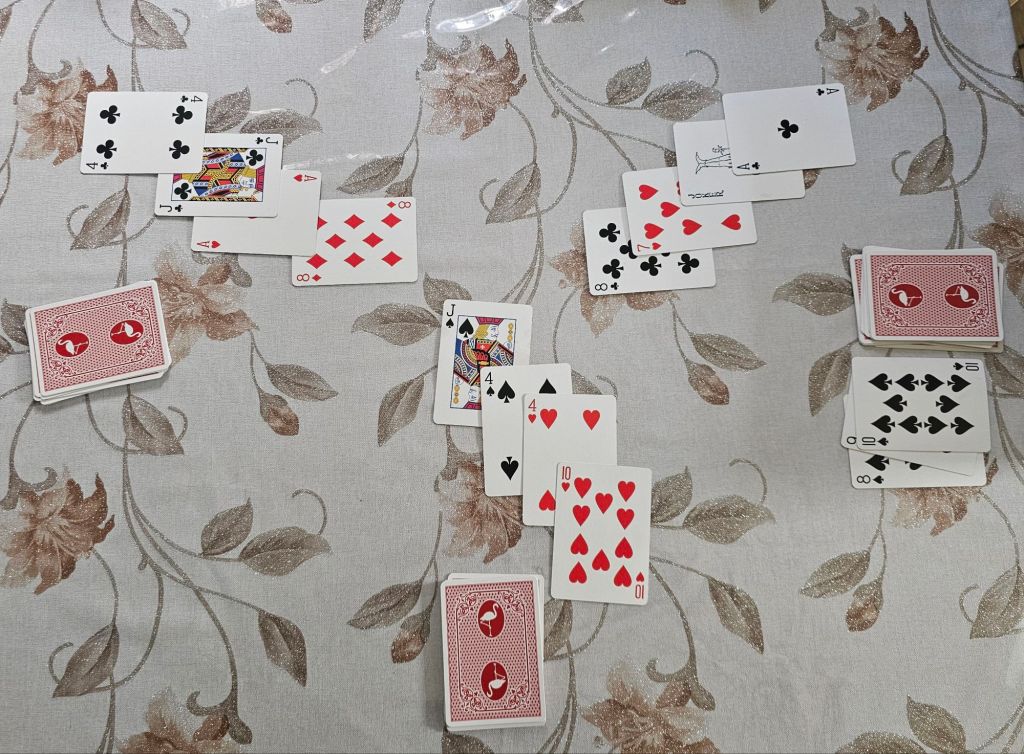
If 2 players reveal Jacks, then War is declared for all again.
Mix and Match
Using the options, you could play Automatic Peace, or Underdog Prisoners of War, or even Automatic Underdog Prisoners of Peace. All you have to do is combine the options.
There most likely are more options out there. Please comment with any more, and I will add them.
 Baldwin Games
Leave a comment